


INTRODUCTION
Adolescent mental health has emerged as a critical global public health concern. Approximately one in ten adolescents aged 10–19 years experiences a mental health condition, many of which remain untreated, particularly in low- and middle-income countries1. In Indonesia, national survey findings indicate a substantial burden of adolescent mental health problems, including depression and anxiety, underscoring the need to improve access to care2,3.
Differences between urban and rural contexts further shape such disparities. Evidence from meta-analysis suggests that urban residents experience a higher risk of anxiety and mood disorders compared with rural populations. A meta-analysis published in Deutsches Ärzteblatt International reported a 21% higher risk of anxiety disorders and a 39% higher risk of mood disorders among urban populations4. Urban environments are often characterized by higher population density, noise, pollution, and psychosocial stressors. In contrast, rural settings face distinct challenges such as social isolation, unemployment, and limited availability of mental health services. Although urban areas generally offer greater service availability, long waiting times and service saturation may still limit effective access, while structural barriers in rural areas may exacerbate unmet mental health needs5. In these diverse contexts, adolescence is a particularly vulnerable developmental period. Marked by rapid biological, psychological, and social transitions, adolescence is the stage at which many mental health disorders first emerge and may persist into adulthood if left untreated. During this period, the family environment – and parents in particular – plays a central role in shaping adolescents’ emotional well-being and pathways to care6.
Parents often function as the primary decision-makers and ‘gatekeepers’ in adolescents’ access to mental health services. Their roles encompass recognizing symptoms, interpreting severity, and determining whether and when professional help should be sought7,8. However, parents frequently encounter difficulties in identifying mental health problems, locating appropriate services, and navigating care systems9. These challenges are compounded by concerns related to stigma, social labelling10, and potential long-term consequences of mental health records, which may further discourage service utilization11.
To better understand these decision-making processes, the Health Belief Model (HBM) offers a well-established theoretical framework for examining health-related behaviours12. The model posits that individuals’ actions are shaped by perceived vulnerability, perceived severity, perceived threat, perceived benefits, perceived barriers, cues to action, and self-efficacy13. While the HBM has been widely applied to preventive health behaviors, its use in examining parental decision-making related to adolescent mental health service utilization remains limited, particularly in low- and middle-income country contexts14. Accordingly, there is a critical gap in empirical evidence regarding which HBM constructs are most salient in shaping parents’ mental health service-seeking behavior for adolescents. Addressing this gap is essential for informing family-centered mental health promotion and improving access to care.
Understanding which parental perceptions are associated with help-seeking behavior may inform family-centered mental health promotion strategies and improve access to care. Therefore, this study examined the association between parental health beliefs and adolescent mental health service-seeking behavior in an urban Indonesian community using the HBM framework.
METHODS
Study design
A community-based cross-sectional study was conducted to examine the association between parental health beliefs and adolescent mental health service-seeking behavior.
Study setting and location
Data collection was conducted between August and December 2024 in the catchment area of the Gedongtengen Community Health Centre, specifically in Pringgokusuman Subdistrict. The area was selected based on health center records indicating a relatively high number of adolescent mental health service visits compared with other service areas15.
Participants
The population in this study comprised parents or primary caregivers of adolescents aged 10–24 years residing in the study area. A total of 107 parents who met the eligibility criteria and completed the questionnaire were included in the analysis. Non-participation occurred due to refusal to provide consent, inability to be contacted, incomplete responses, or adolescents not living with their parents.
Participants were recruited using purposive sampling to include parents with caregiving responsibility and experience related to adolescent health service utilization. Because purposive sampling was used and the sampling frame was not enumerated, the number of individuals approached but not enrolled could not be determined.
Data collection instruments and measurements
Data were collected using a structured questionnaire developed based on the HBM. The questionnaire was pilottested in a neighboring subdistrict. Construct validity was assessed using item–total association analysis, and internal consistency reliability was evaluated using Cronbach’s alpha. Reliability coefficients were as follows: perceived vulnerability (0.845), perceived severity (0.861), perceived threat (0.939), perceived benefits (0.890), perceived barriers (0.910), cues to action (0.719), self-efficacy (0.748), and parental behavior in seeking youth mental health services (0.703). Also, minor revisions were made prior to the main data collection.
Both the Guttman and Likert scales were used in this study. The Guttman scale assessed parental behavior in accessing adolescent mental health services, offering two response options – Yes and No – with 0 assigned to incorrect responses and 1 to correct ones. The Likert scale was applied to all independent variables, offering five response categories: strongly agree (score 5), agree (score 4), undecided (score 3), disagree (score 2), and strongly disagree (score 1) for favorable statements, and the reverse scoring for unfavorable statements.
Parental mental health service-seeking behavior was dichotomized into ‘good’ and ‘poor’ behavior based on the total score obtained. Each HBM construct was also categorized into two levels for analytical purposes as follows: perceived vulnerability (high vs low), perceived severity (high vs low), perceived threat (high vs low), perceived benefits (high vs low), perceived barriers (high vs low), cues to action (present vs absent), and self-efficacy (high vs low).
Cutoff points for dichotomization were determined a priori based on total score distributions and theoretical considerations: 52 for perceived vulnerability, 69 for perceived severity, 70 for perceived threat, 68 for perceived benefits, 55.69 for perceived barriers, 60 for cues to action, and 58 for self-efficacy. Parental service-seeking behavior was classified as ‘good’ or ‘poor’ using a cutoff score of 13. Continuous scores for HBM constructs were dichotomized using predetermined cutoff values based on score distributions and theoretical relevance to facilitate interpretability in logistic regression analyses. In addition, monthly household income was categorized based on the regional minimum wage of Yogyakarta in 2024 (IDR 2492997; with 1000 Indonesian Rupiahs about US$0.059) into below and equal to or above the minimum wage.
Statistical analysis
Data were analyzed using SPSS version 25. Descriptive statistics are reported as frequencies (n) and percentages (%). Associations between each independent variable and service-seeking behavior were assessed using chi-squared tests and presented as crude odds ratios (ORs) with 95% confidence intervals (CIs). Variables with p<0.25 in the bivariate analysis were included in a multiple binary logistic regression model using backward likelihood ratio selection. Adjusted odds ratios (AORs) with 95% CI are reported. Statistical significance was set at p<0.05.
RESULTS
Characteristics of respondents
A total of 107 parents met the eligibility criteria and were included in the final analysis (Figure 1). The characteristics of the respondents are presented in Table 1. All respondents were aged 15–64 years, corresponding to the productive age range.
Table 1
Characteristics of respondents, Pringgokusuman Subdistrict, Yogyakarta, Indonesia, August–December 2024 (N=107)
Figure 1
Flow diagram of participant selection, Pringgokusuman Subdistrict, Yogyakarta, Indonesia, August–December 2024
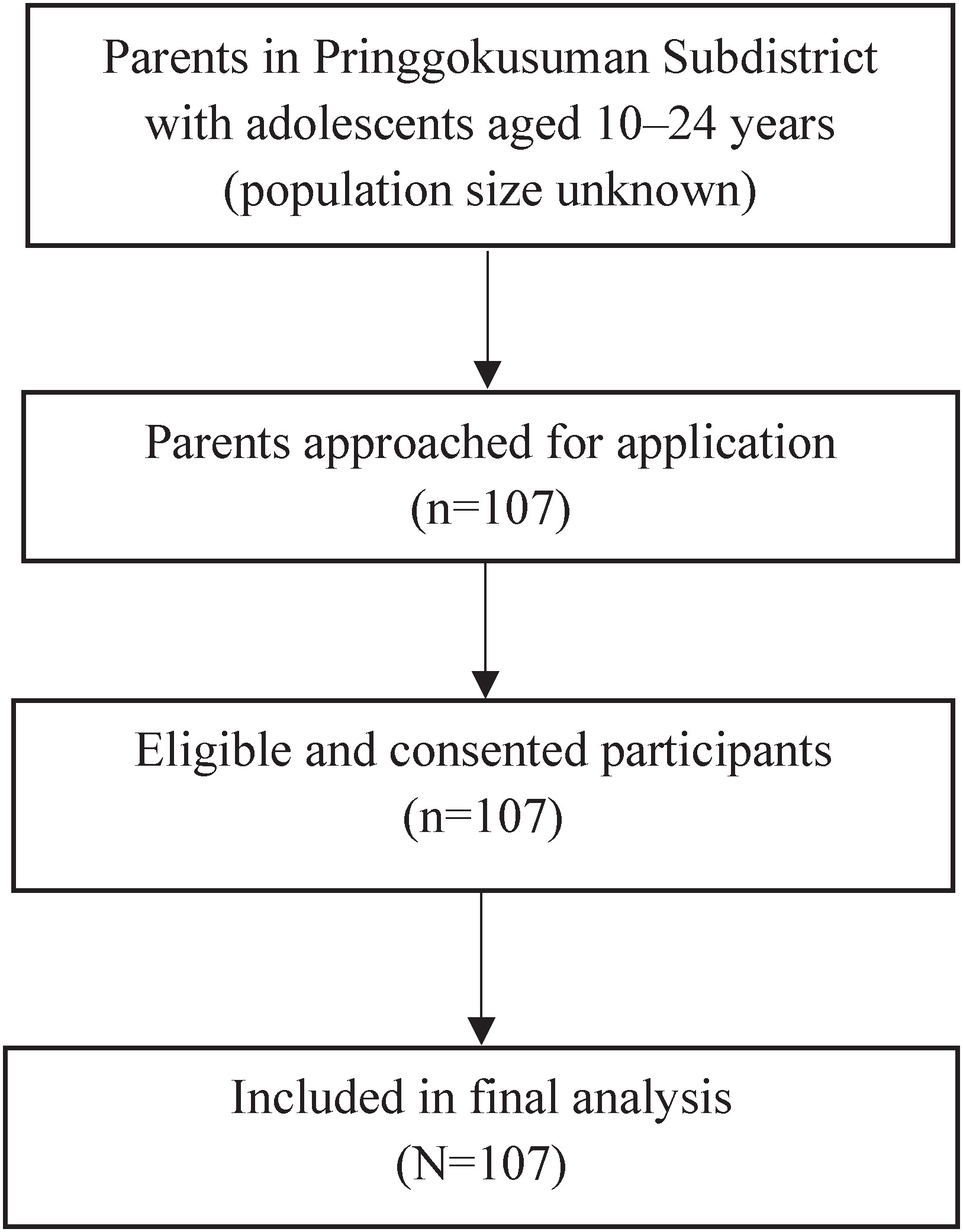
Table 1 shows that the majority of respondents were female (88.8%). The majority had primary to secondary education (85.0%), while 15.0% had higher education. Regarding occupation, 30.8% were homemakers, followed by merchants (6.5%) and self-employed workers (6.1%), with other occupations representing smaller proportions.
Most households reported a monthly income below the regional minimum wage (68.2%). Mothers accounted for 88.8% of respondents, and fathers for 11.2%. Most respondents had one adolescent (62.6%), followed by two (35.5%) and three (1.9%). A total of 139 adolescents were represented: 30.2% aged 10–13 years, 28.1% aged 14–17 years, and 41.7% aged 18–24 years.
Distribution of Health Belief Model constructs and parental behavior
Table 2 presents the distribution of Health Belief Model constructs and parental behavior. More than half of parents reported low perceived vulnerability (58.9%), while 41.1% reported high vulnerability. For perceived severity, 56.1% reported low severity and perceived threat was reported by 47.7% of respondents. Perceived benefits were reported by 66.4%, while perceived barriers were reported by 50.5%. Furthermore, cues to action were present in 60.7% of respondents, and 55.1% reported high self-efficacy. Thus, 54.2% of parents demonstrated good service-seeking behavior and 45.8% poor behavior.
Table 2
Distribution of Health Belief Model constructs and parental service-seeking behavior, Pringgokusuman Subdistrict, Yogyakarta, Indonesia, August–December 2024 (N=107)
Associations between Health Belief Model constructs and parental mental health service-seeking behavior
Table 3 demonstrates the bivariate and multivariate associations between Health Belief Model constructs and parental service-seeking behavior. In bivariate analysis, perceived vulnerability (OR=3.50; 95% CI: 1.56–7.85; p=0.004), perceived severity (OR=3.22; 95% CI: 1.45–7.14; p=0.006), perceived threat (OR=3.27; 95% CI: 1.48–7.24; p=0.003), and cues to action (OR=3.52; 95% CI: 1.56–7.94; p=0.004) were associated with service-seeking behavior. In addition, perceived benefits (OR=2.15; 95% CI: 0.95–4.86; p=0.099), perceived barriers (OR=1.04; 95% CI: 0.49–2.23; p=1.000), and self-efficacy (OR=2.16; 95% CI: 0.99–4.70; p=0.078) did not show statistically significant.
Table 3
Association between Health Belief Model constructs and parental mental health service-seeking behavior, Pringgokusuman Subdistrict, Yogyakarta, Indonesia, August–December 2024
| Variables | Categories | OR (95% CI) | p | AOR (95% CI) | p |
|---|---|---|---|---|---|
| Perceived vulnerability | High ® | 1 | 1 | ||
| Low | 3.50 (1.56–7.85) | 0.004* | 0.38 (0.16–0.89) | 0.026* | |
| Perceived severity | High ® | 1 | |||
| Low | 3.22 (1.45–7.14) | 0.006* | |||
| Perceived threat | High ® | 1 | 1 | ||
| Low | 3.27 (1.48–7.24) | 0.003* | 0.39 (0.17–0.91) | 0.03* | |
| Perceived benefits | High ® | 1 | |||
| Low | 2.15 (0.95–4.86) | 0.099 | |||
| Perceived barriers | High ® | 1 | |||
| Low | 1.04 (0.49–2.23) | 1.000 | |||
| Cues to action | Present ® | 1 | 1 | ||
| Absent | 3.52 (1.56–7.94) | 0.004* | 0.44 (0.18–1.07) | 0.07 | |
| Self-efficacy | High ® | 1 | |||
| Low | 2.16 (0.99–4.70) | 0.078 |
AOR: adjusted odds ratio. Outcome: poor parental mental health service-seeking behavior (reference = good behavior). AOR: adjusted odds ratio. The adjusted model includes all Health Belief Model constructs simultaneously. Blank cells indicate variables not retained in the final multivariable model. ® Reference categories.
In the multivariate model, perceived vulnerability (AOR=0.38; 95% CI: 0.16–0.89; p=0.026) and perceived threat (AOR=0.39; 95% CI: 0.17–0.91; p=0.030) were significantly associated with lower odds of poor service-seeking behavior. Cues to action showed no statistically significant association (AOR=0.44; 95% CI: 0.18–1.07; p=0.070).
Overall, the results indicate that several Health Belief Model constructs were associated with parental mental health service-seeking behavior at the bivariate level, including perceived vulnerability, perceived severity, perceived threat, and cues to action. However, after adjustment in the multivariable model, only perceived vulnerability and perceived threat remained independently associated with parental service-seeking behavior. Other constructs, including perceived benefits, perceived barriers, self-efficacy, and cues to action, did not show statistically significant associations in the adjusted analysis.
DISCUSSION
This study examined parental perceptions of adolescent mental health and their association with mental health service-seeking behavior using the Health Belief Model framework. The findings demonstrate that, among the HBM constructs assessed, perceived vulnerability and perceived threat were the only factors that remained significantly associated with parental service-seeking behavior after multivariable adjustment. These results suggest that parents’ appraisal of adolescents’ risk and potential consequences of mental health problems may be more salient in shaping help-seeking decisions than perceptions of benefits, barriers, or self-efficacy. Within the context of an urban Indonesian setting, this pattern highlights the central role of risk perception in parental decision-making regarding access to adolescent mental health services. It provides empirical support for the selective applicability of the Health Belief Model in this context.
The results of this study indicate that among all the HBM constructs analyzed, perceived vulnerability and perceived threat are the most dominant factors associated with parental behavior in seeking mental health services for adolescents. This finding indicates that parental assessments of the risks and potential impacts of mental health problems play a more significant role than considerations of service benefits, barriers to access, or self-efficacy.
Furthermore, perceived vulnerability refers to parents’ beliefs about the likelihood of their adolescent experiencing mental health problems16. The results of this study indicate that the higher the perceived vulnerability of parents, the lower the likelihood of not seeking mental health services. In other words, parents who recognize that their child is at risk for mental health disorders tend to be more proactive in seeking help, including seeking information, consulting with health professionals, and accessing formal mental health services. This finding aligns with previous research showing that risk perception is a key driver in decision-making regarding seeking health services17.
Some international studies also show that parents act as ‘gatekeepers’ in the child and adolescent mental health service system18-20. When parents are able to recognize the early signs of mental health disorders – such as symptoms of depression, anxiety, or behavioral changes – awareness of the need for help increases, leading to quicker and more appropriate seeking of health services21. In this context, parental mental health literacy is an important supporting factor, because the ability to recognize and understand mental health symptoms is closely related to increased perceptions of vulnerability and readiness to seek professional help21-23.
In addition to perceived vulnerability, perceived threat was also associated with parental mental health service-seeking behavior in this study. Parents who perceived adolescent mental health problems as a serious threat had lower odds of poor service-seeking behavior compared with those who did not perceive a threat. This finding indicates that higher perceived threat was associated with a greater likelihood of seeking mental health services. Parents’ perceived threats may include concerns about long-term consequences, such as ongoing emotional distress, decreased social and academic functioning, and impaired psychosocial development. However, these perceived threats are often influenced by parents’ limited understanding of mental health, including misunderstandings about the nature of mental disorders and the effectiveness of professional interventions10. In many cultural contexts, including Indonesia, stigma against mental health also reinforces negative perceptions and slows down the decision to seek help24.
In this study, not all HBM constructs were associated with parental service-seeking behavior simultaneously, as only perceived vulnerability and perceived threat remained significant in the adjusted model. This pattern is consistent with previous studies reporting selective involvement of HBM constructs in health behavior outcomes25,26. In particular, these results confirm that constructs related to risk perception, namely perceived vulnerability and perceived threat, have stronger explanatory power than utility constructs such as perceived benefits, barriers, and self-efficacy27,28. These findings support the view that in mental health issues, especially those involving parental decisions as ‘gatekeepers’, the HBM needs to be understood selectively and contextually, rather than as a series of constructs that operate simultaneously and equally25. Thus, this study extends the existing literature by showing that cognitive mechanisms in parental decision-making tend to be initiated by an assessment of the risks and potential impacts of mental health problems, before rational considerations regarding the benefits or appropriateness of services become relevant25,26. This indicates that the theoretical adaptation of the HBM to the context of adolescent mental health, needs to place risk perception as the primary starting point in the service-seeking behavioral pathway.
Although this study did not find a significant relationship between perceived benefits, perceived barriers, and self-efficacy and service-seeking behavior in a multivariate analysis, this finding does not negate the conceptual role of these constructs. Previous studies have shown that stigma, fear of social labelling, limited access to services, and the belief that mental health problems can be managed independently are often important barriers to seeking help10,29. The lack of a significant relationship between perceived benefits, perceived barriers, self-efficacy, and service-seeking behavior in the multivariate analysis can be understood as reflecting the cognitive sequence in parental decision-making. In this context, parents appear not to have reached the stage of rational evaluation of service benefits or access barriers when perceptions of vulnerability and threat to their child’s mental health have not yet been firmly established30,31. In other words, consideration of service utility becomes less relevant if mental health problems are not perceived as risky or threatening30,32.
This pattern suggests that parents’ mental health service-seeking process is more reactive than preventive, with the decision to act only emerging when the risks and potential consequences are clearly perceived. This finding aligns with the argument that in mental health issues, particularly in adolescents, problem recognition and threat assessment are cognitive prerequisites that precede consideration of benefits, barriers, and confidence to act33,34. Therefore, the insignificance of these constructs does not necessarily negate their role but indicates that this role appears at a more advanced stage of decision-making33,35. However, the results of this study suggest that in the context studied, these considerations become less dominant when parents perceive the child’s condition as risky and threatening.
These findings suggest that parental recognition of adolescent mental health risk may be an essential factor associated with service utilization. Rather than indicating specific intervention effects, the results highlight the potential relevance of parental cognitive appraisal in help-seeking pathways. Further longitudinal and intervention studies are required to determine whether modifying parental risk perception influences service utilization patterns.
Strengths and limitations
This study has several strengths. The use of the Health Belief Model provided a structured framework for examining parental mental health service-seeking behavior in an adolescent mental health context. The inclusion of both bivariate and multivariable analyses allowed identification of HBM constructs independently associated with the outcome. In addition, focusing on parents as decision-makers offers a perspective relevant to adolescent healthcare utilization.
Several limitations should be considered. The cross-sectional design precludes causal inferences between parental perceptions and mental health service-seeking behavior. The use of purposive sampling and the relatively small sample size may limit the generalizability beyond the study setting. Data were obtained through a self-report questionnaire, which may introduce misclassification of both exposures (HBM constructs) and outcome (service-seeking behavior), including potential social desirability and recall bias. Although multiple variables were included in the regression model, residual confounding from unmeasured factors, such as prior experiences with mental health services, accessibility of care, or family attitudes toward mental illness, cannot be excluded. Additionally, dichotomization of continuous HBM scores may have reduced variability and statistical power.
CONCLUSIONS
This study found that parental mental health service-seeking behavior was associated with perceived vulnerability and perceived threat to adolescents’ mental health problems, while other Health Belief Model constructs were not significant after adjustment. These findings highlight the relevance of parental risk appraisal in understanding help-seeking behavior within the studied context.